St. Patricks Day, Welcome to The Ashgrove Inn!
March 17th 2009
Who is this Patrick?, and who celebrates? And why?
Born in Banwen (where is Banwen)
ST PATRICK - The most celebrated Welshman in America?
St. Patrick's Day is celebrated in many communities across the world each year on March 17th. And, although he may be the patron saint of Ireland, it is in the United States where the celebrations have become a national festival with grand street parades, entire rivers being turned green and prodigious amounts of green beer being consumed.
The St. Patrick's Day custom arrived in America in 1737, that being the first year it was publicly celebrated in Boston. Most Americans, and other folk across the world, assume that Patrick was Irish: not so, many scholars believe he was Welshman! Patrick (Patricius or Padrig) was born around 386 AD to wealthy parents. Patrick's birthplace is in believed to be in Banwen, just a mile or so from The Ashgrove Inn! His birth name was Maewyn Succat. In his writings he tells that as a boy he found shamrocks at Ashgrove. That probably was not here, but could have been a nearby village, Onllwyn. Onllwyn could easily be a mis-translation from Welsh, Lwyn Onn, which does in fact mean Ashgrove! There is a Memorial stone erected near what is supposed to be the place of his birth, and a parade is arranged here every year, to remember "the most famous son of Banwen". This could very well become a tourist attraction of the future? Remember: there are 10 times as many "Irish" in USA, than in Ireland! Not much is known about his early life, but it is believed he was captured and sold into slavery with "many thousands of people"1 by a group of Irish marauders that raided his family estate. Patrick was a slave for six long years, during which time he lived and worked an isolated existence as a shepherd. He finally managed to escape his captors, and according to his writings, a voice spoke to him in a dream, telling him it was time to leave Ireland. To this end, it is said that Patrick walked nearly 200 miles from County Mayo, where he was held, to the Irish coast. After his escape, Patrick apparently experienced a second revelation—an angel in a dream telling him to return to Ireland as a missionary. Shortly after this Patrick travelled to Gaul, were he studied religious instruction under Germanus, bishop of Auxerre. His course of study lasted for more than fifteen years and culminated with his ordination as a priest. He eventually returned to Ireland to join other early missionaries, probably settling in Armagh, intent on converting the native pagans to Christianity. His seventh century biographers enthusiastically claim that he converted all of Ireland to Christianity. In truth it does appear that Patrick was very successful at winning converts. Familiar with the Irish language and culture, he adapted traditional ritual into his lessons of Christianity rather than attempting to eradicate native beliefs. He used bonfires to celebrate Easter since the Irish were used to honouring their gods with fire, he also superimposed a sun, a powerful native symbol, onto the Christian cross to create what is now called a Celtic cross. Upsetting local Celtic Druids it is said that Patrick was imprisoned on several occasions, but he managed to escape each time. He travelled extensively throughout Ireland, establishing monasteries across the country, setting up the schools and churches that would aid him in his conversion of the Irish to Christianity. St Patrick’s mission in Ireland lasted approximately thirty years, after which time he retired to County Down. It is said that he died on March 17th in AD 461, and since then, the date has been commemorated as St. Patrick's Day. A rich tradition of oral legend and myth surrounds St. Patrick, most of which has undoubtedly been exaggerated over the centuries - spinning exciting tales as a means to remember history has always been a part of Irish culture. Some of these legends recall how Patrick raised people from the dead, others that he drove all the snakes from Ireland. The latter would indeed have been a miracle, as snakes have never been present on the island of Ireland. Some claim however the snakes to be analogous with the native pagans.However, it is likely that the snakes NEVER were in Ireland, as Ireland already was seperated from Britain, with plenty of water between them, when snakes actuslly came to Britain. They had easy access to Britain, as it was joined to Mainland Europe. But it is a good storym anyroad. Another Irish tale which may also have an element of truth about it tells how Patrick used the three-leafed shamrock to explain the Trinity. He apparently used it to show how the Father, the Son, and the Holy Spirit could all exist as separate elements of the same entity. His followers adopted the custom of wearing the shamrock on his feast day, and shamrock green remains the essential colour for today’s festivities and celebrations, and it COULD, I said COULD originate from Ashgrove (or Onllwyn). |
Celebrate in STYLE!
Vibrant, historical and with a wealth of pubs, the Irish capital is the perfect place to celebrate St Patrick's Day on 17th March.
More than half a million people from all over the world make the journey to Ireland's capital to take part in celebrating the country's patron saint. Maybe they should have been coming here instead?Anyway , just what makes Dublin such a great place to visit on St Paddy's Day?
It has a tale to tell
Legend has it that St Patrick chased all the snakes away from Ireland. Although the historical accuracy of this can't be proved (many believe the snakes to be a symbol of evil, as St Patrick set about banishing paganism from the island), it makes for a good story, something which Dublin knows well.
Plenty of writers have called the Irish capital home. Walk in many of their footsteps at Ireland's oldest university Trinity College, an architectural marvel in the city centre. The university houses The Book Of Kells, an illuminated manuscript dating back to 800AD.
Learn while you drink. It's not often the two go together, but on the Literary Pub Crawl, guides will take you to the drinking holes of famous Irish writers such as James Joyce, Oscar Wilde and WB Yeats.
 It has green
And it's not just the clothing in the many souvenir shops in Grafton Street. For a city proud of its Georgian architecture, Dublin has a surprising number of green spaces.
Wide open St Stephen's Green has a gory history of hangings, but it's now a sanctuary in the city centre, its statues reminders of Ireland's turbulent past.
Another welcome reprieve from the crowds is the secluded Iveagh Gardens, complete with its own grotto, maze and rose garden.
Dublin's Phoenix Park is Europe's largest enclosed urban park (712 hectares) where you'll not only find joggers, prams and pensioners, but horses (on its polo fields) and deer (in its forests).
 It has plenty of booze
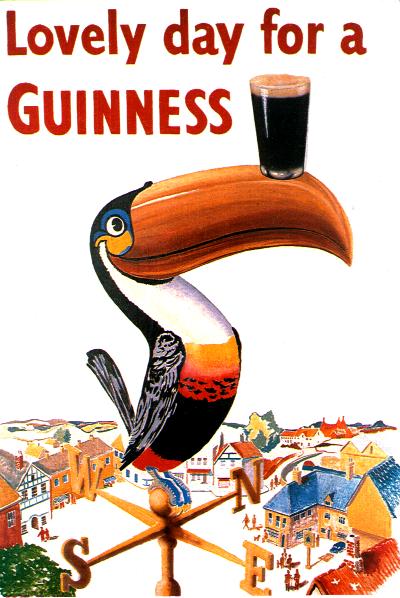
And what would a celebration be without a drink or two? Apart from U2, Ireland's most famous export is, of course, Guinness.
And there's no better place to order a pint of the black stuff than at its home — the Guinness Brewery and Storehouse. Find out how the drink is made, and admire the 360 degrees view of the city from the Gravity Bar. But it's not just Guinness that calls Dublin home.The Ashgrove Inn serves a PERFECT pint of "The Black Stuff", so if that is your only reason for going to Dublin, why not come here instead?
Take a tour of the Old Jameson Distillery, with the promise of a free glass of whiskey at the end of your visit.Here it costs over one Pound!!!!!!
The making of a good drink in Dublin doesn't stop there. Plenty of pubs in the city have their own micro-breweries. Most notable is The Porterhouse in Temple Bar, which offers award-winning home-brewed beer.
 It's fun
Most importantly St Paddy's Day is about fun, or as the Irish say 'craic'. And Dublin has plenty of places to have a good time. The nightlife hub is the Temple Bar district. It's a favourite with stag and hen parties — great if you want to pull and have a laugh, but it can seem tacky and the clubs don't hold back on charging for drinks and DJs.
For more traditional boozers try The Long Hall, an elegant old bar on South Great George's Street, Mulligan's on Poolbeg Street or the Stag's Head near Trinity College, which overflows with students and locals at weekends.
And if you're after an authentic Irish experience, the Cultúrlann na hÉireann (Irish Cultural Institute) in the suburb of Monkstown holds a regular music session every Tuesday night — guaranteed to get your feet tapping and your fingers drumming.
Dublin has plenty of bars and pubs trying to sell tourists 'traditional Irish music' — often just one ginger-bearded gent and his pre-recorded set.
If you are after the real thing, The Cobblestone hosts quality live acts, or try Hughes' Bar — a local favourite so arrive early if you want a seat. Live music venue and pub Whelan's nurtures not only Irish talent, but plays host to international stars (Nick Cave, Liam Finn and The Arctic Monkeys have all played there).
 It has the biggest street party in Ireland
This year the St Patrick's Festival in Dublin begins on March 12, and finishes with a parade on St Paddy's Day itself, March 17.
The action starts at noon from Parnell Square and ends at St Patrick's Cathedral.
Expect marching bands, floats, theatrical performances and loads of people (more than 500,000 spectators are expected to flood the Irish capital ). Can you imagine the traffic chaos it would make if they all came to Banwen instead?
 Need to know
When to go: St Patrick's Day is on March 17, but Dublin is at its warmest in July and August —that's no guarantee it will be dry though. Ireland is notorious for its wet weather.
Getting there: Most airlines fly to Dublin Airport. From there, it's about a 30-minute bus ride into the city. Taxis are expensive, about 30 euros to the city centre.
To get here (to The Ashgrove Inn). Simply punch in the Postcode SA10 9NW on your Sat Nav or Google Map.
WELCOME!
I said: Where is Banwen?
History
The Dulais Valley’s claim to fame is based on ancient and recent developments. St. Patrick; Patron Saint of Ireland was reputedly born at Banwen at the head of the valley circa AD387.
The valley includes the villages of Crynant, Seven Sisters, Pantyffordd, Onllwyn, Dyffryn Cellwen and Banwen.
On Sarn Helen, you can enjoy the view looking out to Coelbren Fort (or Banwen Gaer, as locals call it). Nearby are replicas of the `Gnoll Stones’ and also a plaque naming the peaks of the Brecon Beacons skyline. Sarn Helen was an important Roman road in Wales as it ran the length of the Country linking many Forts and military institutions from Neath (Nidum) in the South to Caernarfon (Segontium) in the North.
Coal Mining
More recently the Dulais Valley was a valley steeped in a history of coal mining. When it was completed in 1930 the Cefn Coed Colliery near Crynant was the deepest anthracite coal mine in the world, it sunk to a depth of 2,250 feet. The colliery is now home to the Cefn Coed Colliery Museum.
The closure of the coal mines had a dramatic effect on the village communities, as with many areas throughout Wales.
Apart from the Cefn Coed Colliery Museum all the visible remnants of the very important and thriving coal mining industry have now disappeared from the valley. Visitors to the area cannot fail to enjoy the wonderful mountain and forest views which are on the doorstep of the Brecon Beacons National Park.
The Dulais Valley Partnership
The Dulais Valley Partnership is another organisation which is working closely with the Communities First team to regenerate the Valley Communities. The Partnership was established in 1996 and has also been involved in a very wide range of activities to improve the life in the valley.
They run a very successful Community transport scheme. They have three vehicles and anyone in the area can make use of the service. Recently free shopping trips have been organised for elderly and disabled people.
A recent development has been the creation of the “Care for Repair” scheme which assists elderly, disabled or low income families to maintain their gardens.
The range of shops, ‘take away’ restaurants and post offices offer good local facilities. "Normans Shop" at Banwen and the supermarket at Seven Sisters are popular places for people to meet and buy their groceries.
In all areas there are a number of halls and Community Centres which provide a wealth of activities and meeting places for lots of local activities such as clubs for older people, bingo sessions, the historical society and slimming groups.
The Dove workshops at Banwen is an independent education Centre which provides a very comprehensive selection of courses. Courses range from basic I.T. for the terrified, right through to degree courses. There is a full time crèche available and the Centre provides a convenient and friendly environment for local people to gain new skills either to assist with employment opportunities or just for fun. Job Centre Plus also provides a drop in Centre once a week at the Dove Centre to help people find employment.
Countryside Attractions
The beautiful countryside provides wonderful opportunities for walking and cycling. The close proximity of the Brecon Beacons make this area an ideal location for people who enjoy out door activities.
Dan Yr Ogof Show Caves are a major tourist attraction and are within easy travelling distance from the Dulais Valley.
‘Call of the wild’ is an organisation based in Seven Sisters, which organises extreme activities such as mountain climbing, clay pigeon shooting and paint balling. The Golf driving range being developed near Seven Sisters is yet another varied activity that makes the Dulais Valley a stimulating and attractive place to live whatever your age, interests or family circumstances.


I said: Where is Banwen?